

Always Active
Required for security, remembering your privacy choice, and core website features. These cannot be switched off.
Melanoma is the most dangerous form of skin cancer, though the least common of the three main types. Early melanomas often have an irregular border, more than one colour and a lack of symmetry, and they change over weeks and months. At Skintell in Mayfair, London, your moles are mapped and reviewed by consultant dermatologists who specialise in melanoma.
Melanoma is a cancer of the pigment cells in the skin, called melanocytes. It can develop in an existing mole or in normal skin where there was no mole before. Most melanomas are treated with surgery alone, but around 10% can spread to the lymph nodes, which is why early detection matters.
Most melanomas contain dark colours, including black. Rarely, in people with fair skin, a melanoma can appear as a red lump without dark pigment. Our ABCDE guide explains how to check your moles.

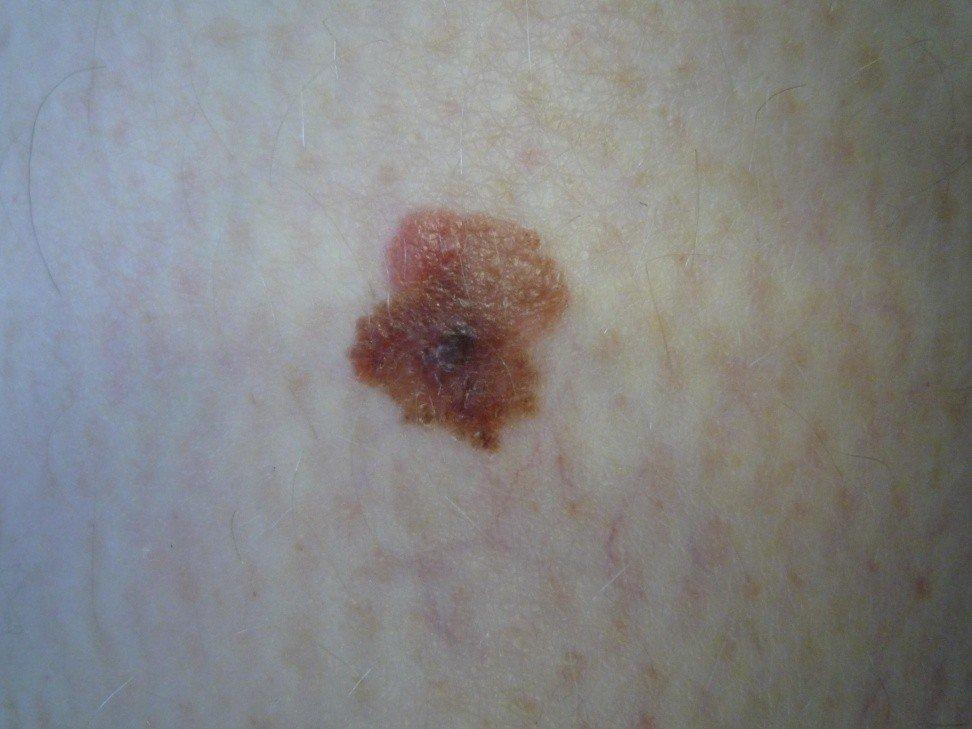


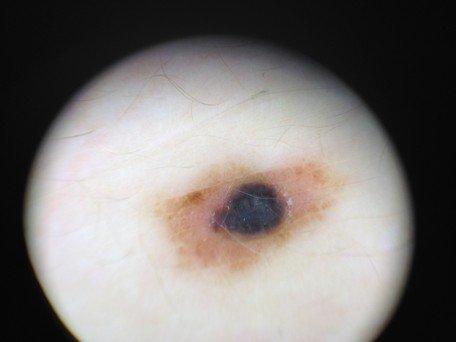


Some melanomas show white areas within them. This is known as regression, and happens when the body's immune system has attacked part of the tumour. Any mole with a mix of dark and white areas should be checked.

The average age at which melanoma is diagnosed in the UK is 55, but it can occur at any adult age.
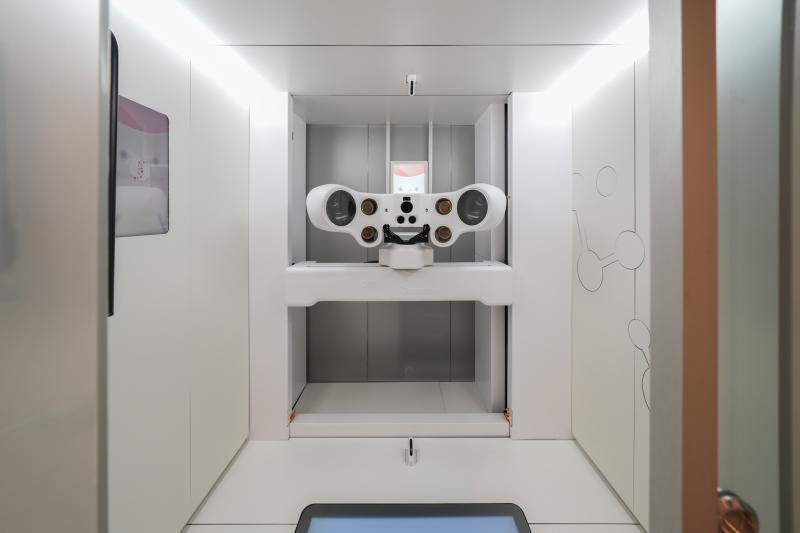
Our mole mapping service records every mole on your body and takes magnified dermoscopy images of each one over 4mm. At follow-up scans, the images are compared to highlight moles that are new or changing, which is one of the most important signs of melanoma.
Your images are reviewed by Dr Veronique Bataille, who holds a PhD in the genetic epidemiology of melanoma and has trained at the Sydney Melanoma Unit, or by Prof. Simone Ribero, whose PhD focused on prognosis in melanoma.
Your report will say clearly that a mole needs to be assessed in person, and explain how to arrange this quickly through your GP, using an urgent suspected cancer referral, or with a private dermatologist. Bring your report and images to that appointment. Our page on what happens if we find something sets out each option.
Most melanomas are treated successfully with surgery alone, particularly when they are found early. Around 10% can spread to the lymph nodes and need further treatment.
Yes. Melanoma can develop in normal skin where there was no mole before, which is why checking your whole skin is important.
Occasionally. In people with fair skin, melanoma can sometimes look like a red lump with no dark pigment.
Melanomas typically change over weeks and months. A mole that is changing quickly should be checked without delay.
If you have a changing mole, many moles or a family history of melanoma, book a scan with Skintell or call 0207 491 9989. Appointments are usually available within 2 to 3 days.
Medically reviewed by Dr Veronique Bataille, MD, PhD, FRCP, Consultant Dermatologist (GMC 3043925).
Testimonials
I've been a patient of Dr. Bataille for many years and the new mole mapping with Skintell is great, super quick scan got the moles I was worried about addressed. My report came back in 2 days and they give you a full image portal for whenever I need to review them.
Quick, efficient, and very friendly staff. This will become my regular check-up spot!
Brilliant service. The mole mapping was very swift and straightforward to arrange and the detailed report came just a few days later which was really clear and easy to understand. I would really recommend.
Excellent service from SkinTell. The whole experience was smooth, professional, and very reassuring. The mole mapping process was quick and thorough, and it was great to know that the images were being reviewed by a consultant …Read on Google: PR's full review (opens in a new tab)
Fantastic experience at Skintell. We came in as a couple for full-body mole mapping. The clinic setup offers complete privacy, the team is lovely and professional, and the gold-standard imaging tech is incredible. Our reports were reviewed …Read on Google: Diana Studio's full review (opens in a new tab)
Book Now
No referral needed. Seen within 2 to 3 days.
Book an AppointmentPrefer to call?
0207 491 99898am–8pm Monday to Friday, 10am–3pm Saturdays.
Same-day appointments are sometimes possible with as little as 2 hours' notice — call to check availability.